
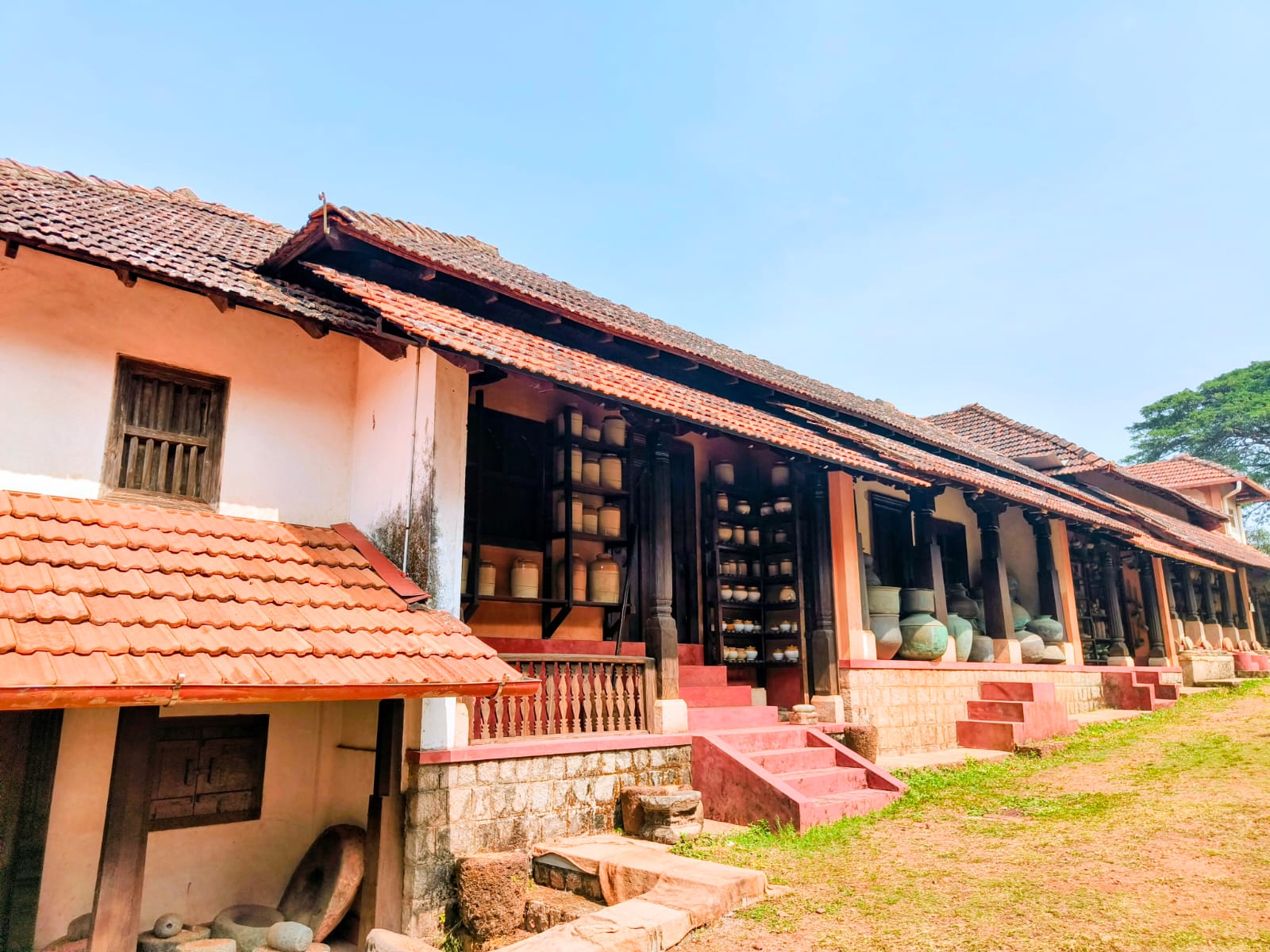
Continuing from the previous post, where I introduced Hasta Shilpa Heritage Village Museum and its vision of preserving Karnataka’s architectural heritage, this part takes you deeper into the museum. Here, I explore two very interesting sections that beautifully reflect everyday life and royal history — Bazaar Street and the Kamal Mahal of Kukanoor.
Bazaar Street
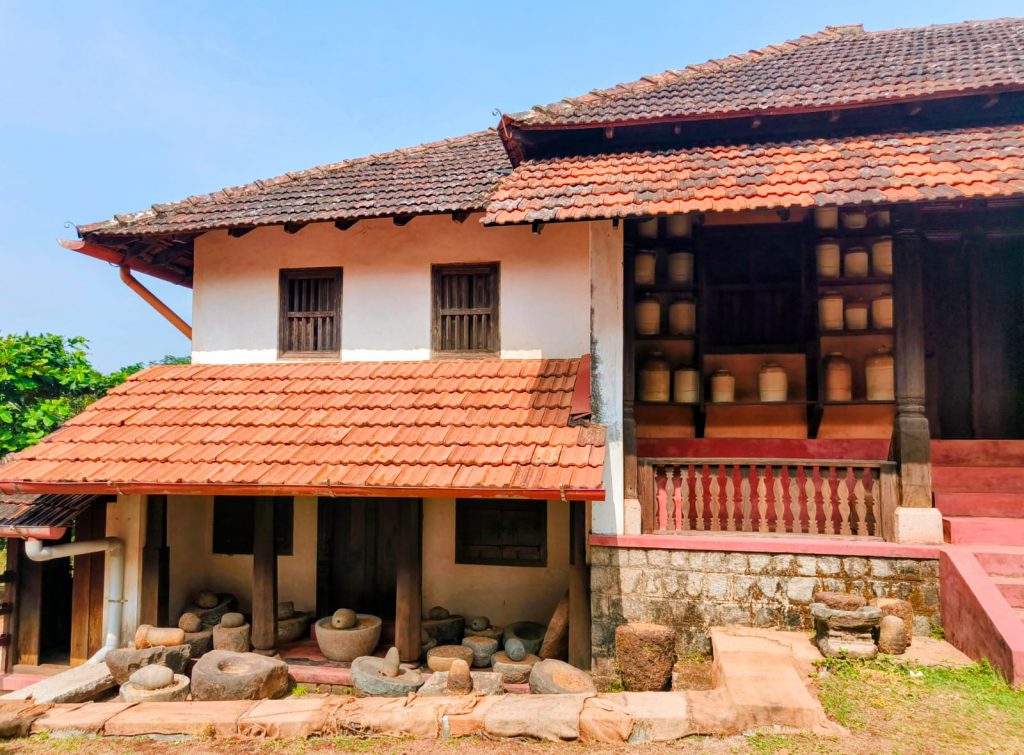
Bazaar Street gives a wonderful glimpse into how daily life looked in the olden days. This area is filled with artifacts that were commonly used in households many years ago.
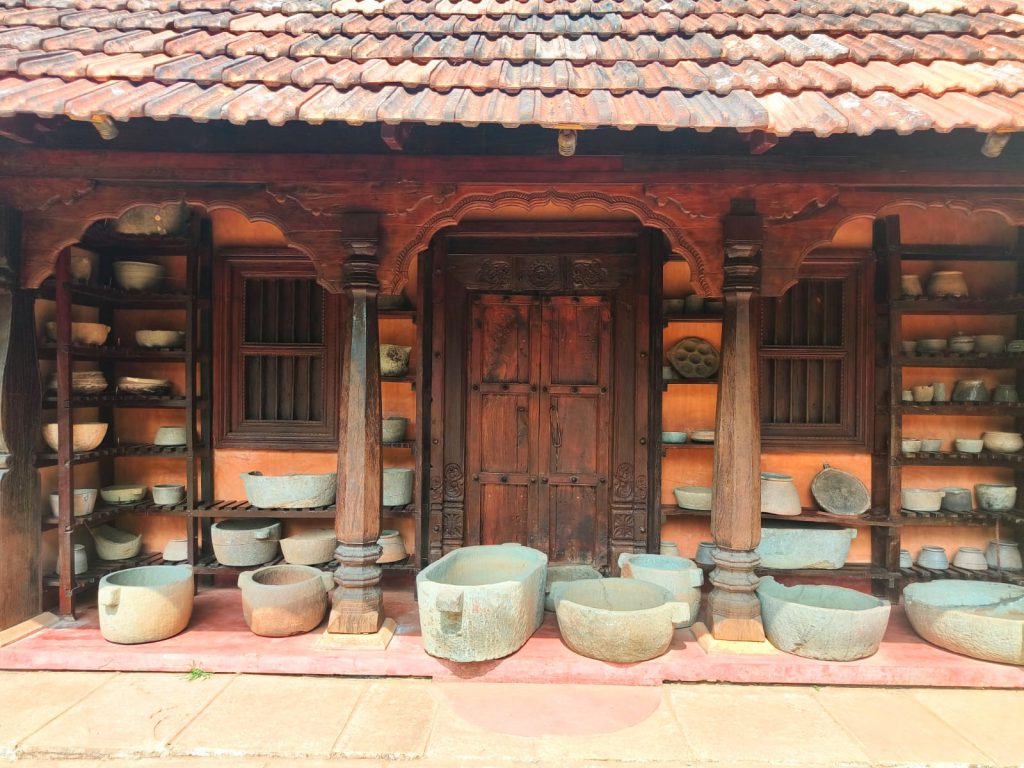
One of the main attractions here is the collection of soapstone utensils. These stones are extremely smooth, almost like soap, which is why they are called soapstones. They were widely used for cooking because of their durability and heat-retaining properties 🍲.
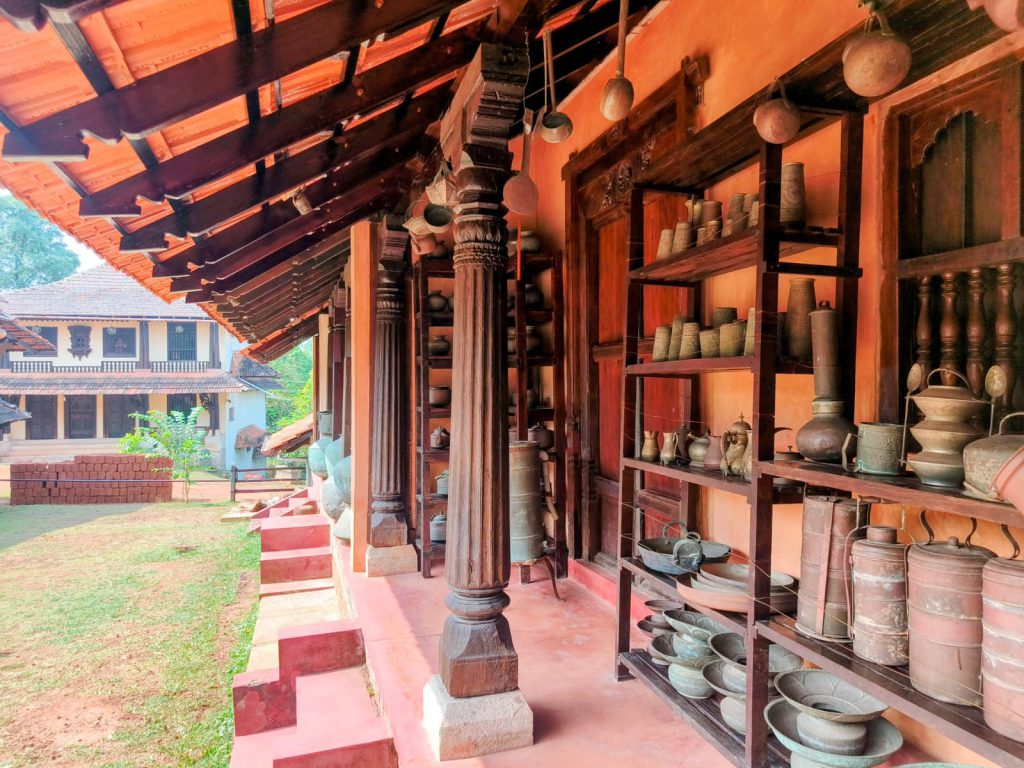
Along with soapstone vessels, you can also see Traditional mixers and grinders used in earlier times, Old-style tea cups ☕, Several day-to-day kitchen utensils.
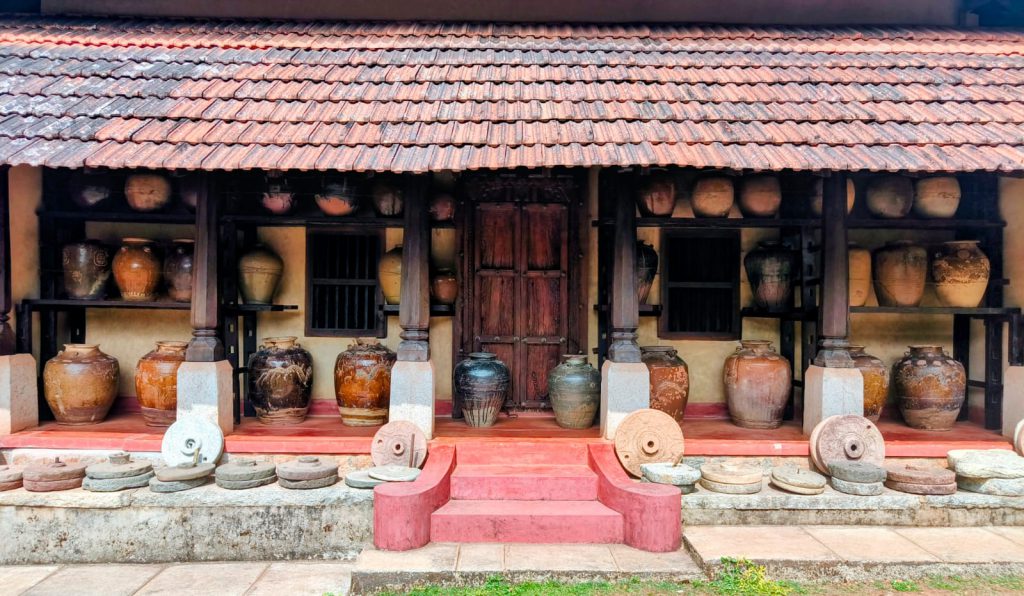
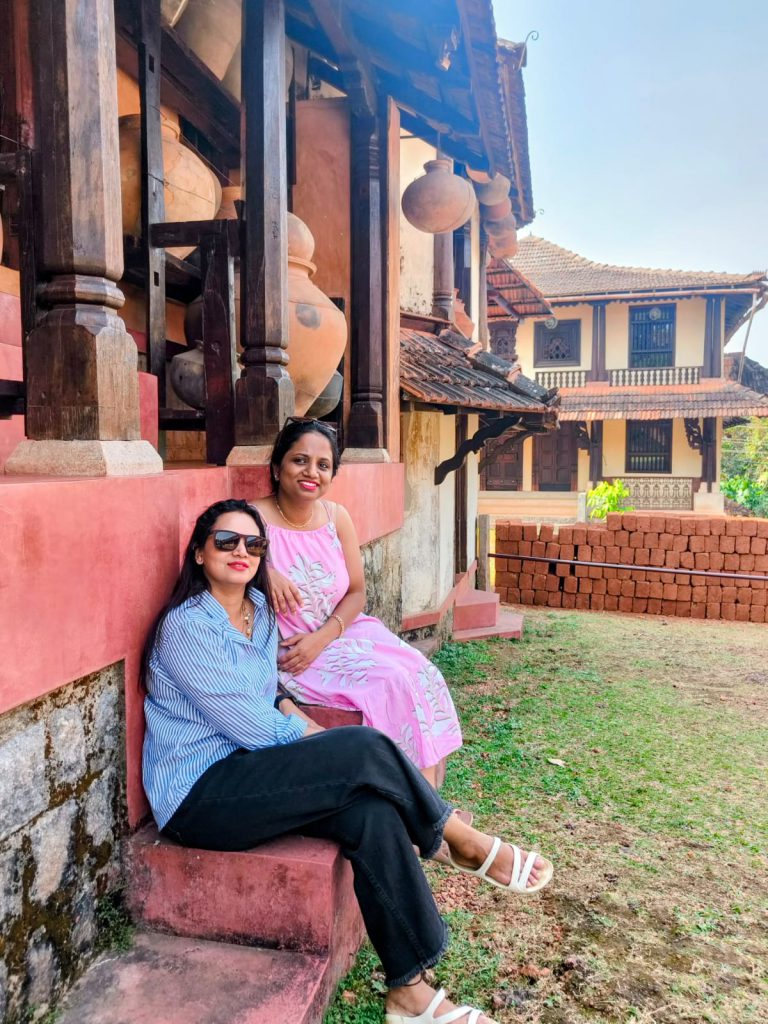
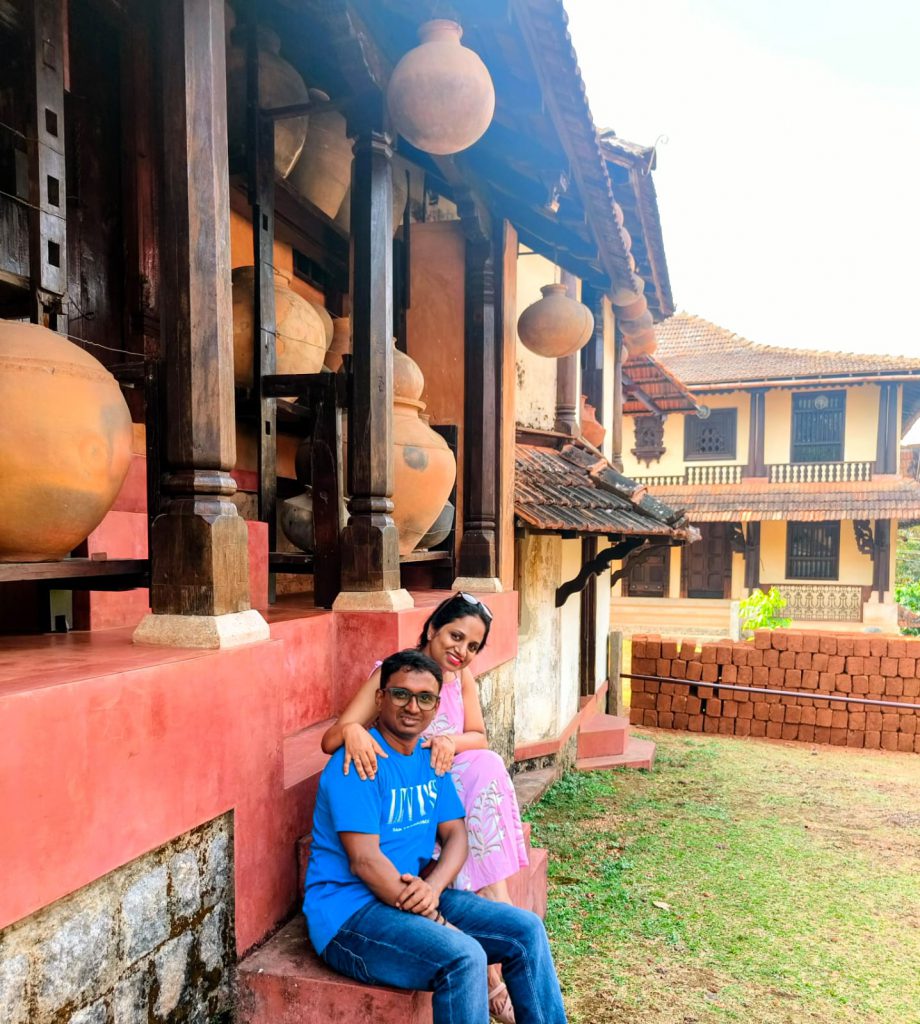
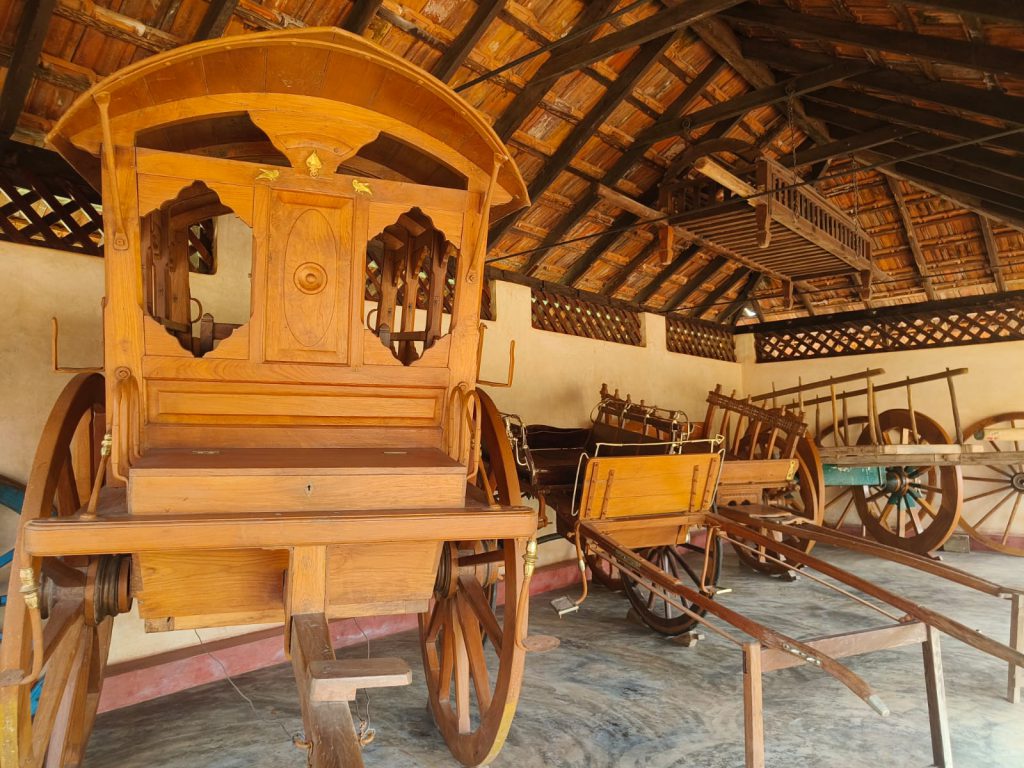
There is also a unique display of chariots that were used during olden times, offering insight into traditional modes of transport.
Kamal Mahal of Kukanoor
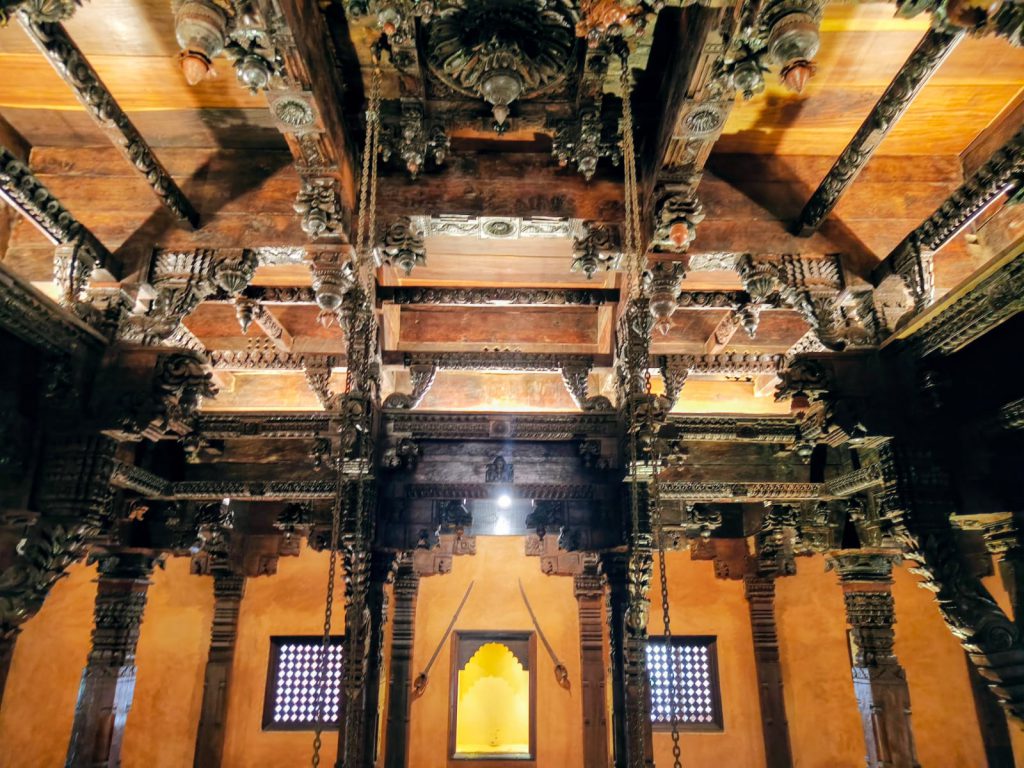
The Kamal Mahal of Kukanoor is one of the most remarkable and historically important structures inside the museum. This model house dates back to around 1341, making it nearly 750 years old 🕰️.
It is believed to be the only surviving wooden structure from the Vijayanagar Empire. After the famous Battle of Talikote, the five Sultanate forces destroyed the city and set it on fire. Almost everything was lost — except this house.
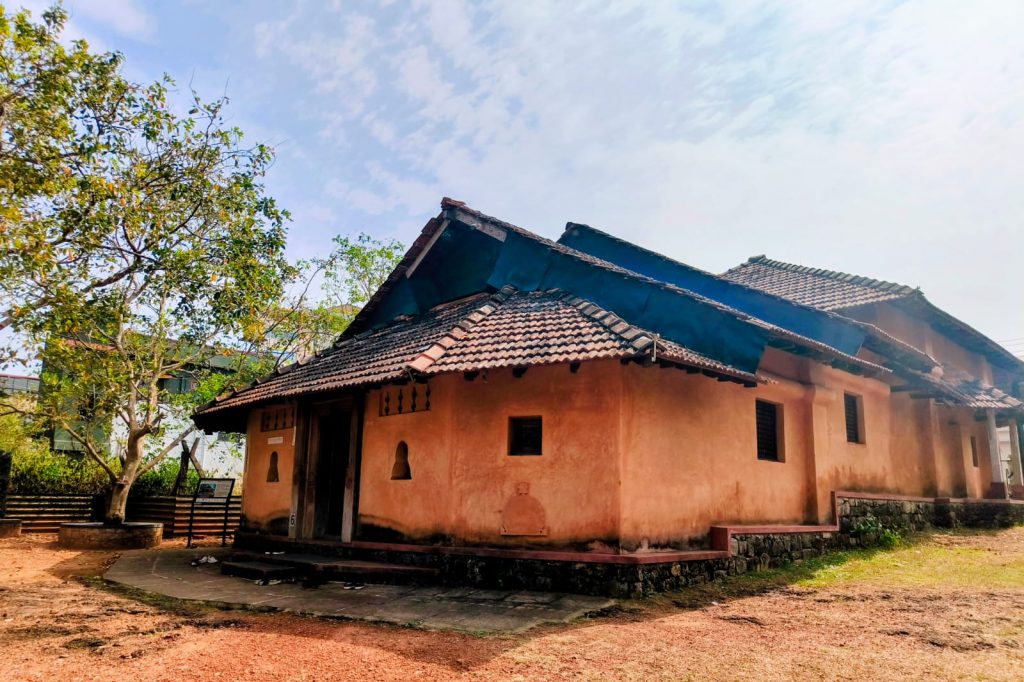
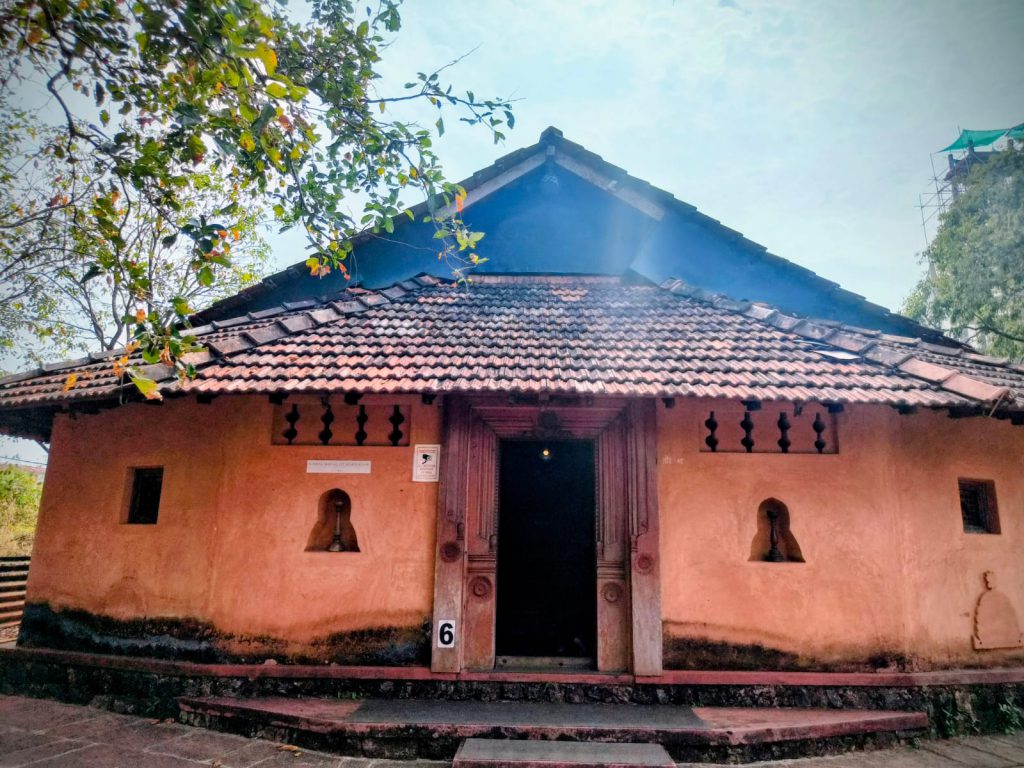
This structure originally belonged to the Army Commander-in-Chief, where emergency meetings were held before the war. Due to its importance, this house survived the massive destruction that followed.
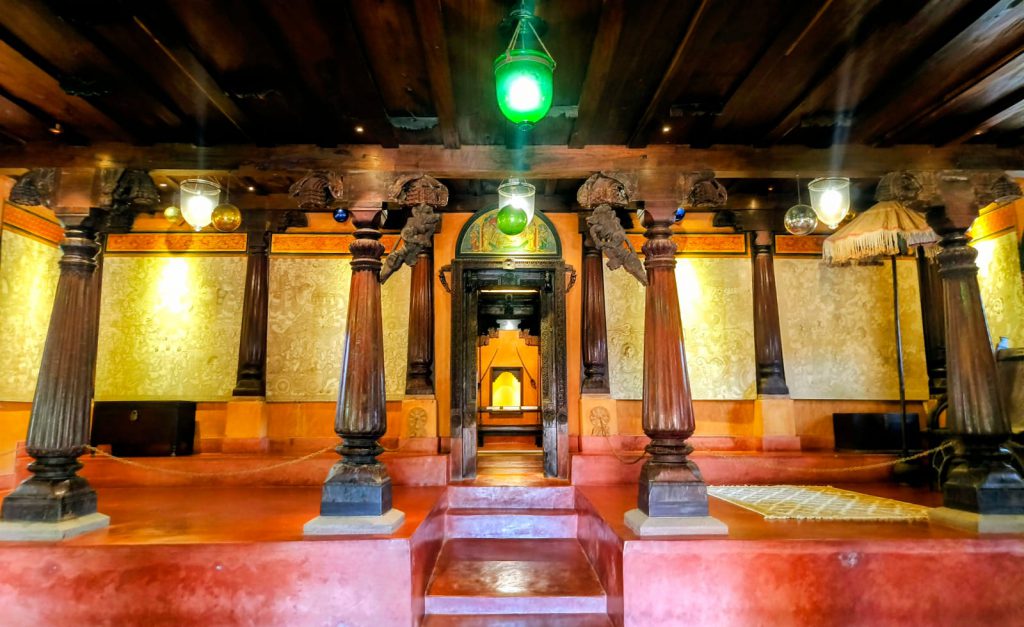
One should take time to observe the beautiful paintings on the walls of Kamal Mahal. These artworks depict scenes from the Mahabharata and the Dashavatara (the ten incarnations of Lord Vishnu) 🎨.
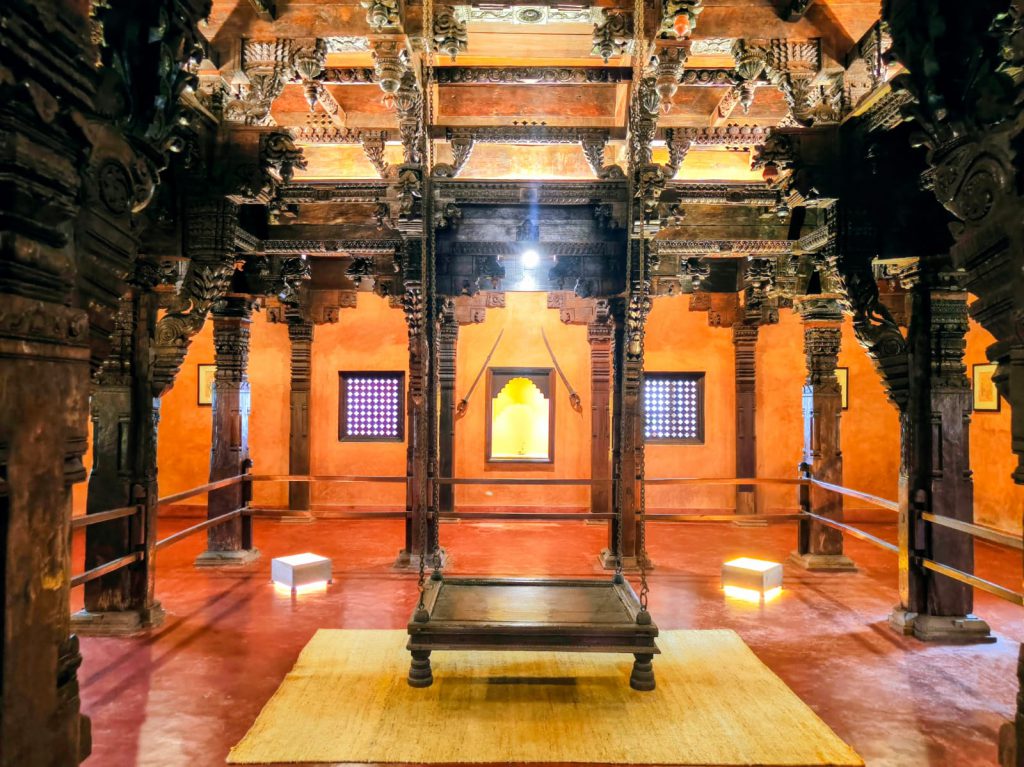
The house is richly carved with lotus motifs, which is why it is named Kamal Mahal. This structure stands as a strong example of how rich the Vijayanagar Empire was — not just in wealth, but also in architecture, art, and craftsmanship 🌸.
This is just another step in exploring the many treasures of Hasta Shilpa. In the next post, I’ll continue walking through more model houses and unique structures that showcase the diverse lifestyles and traditions of Karnataka.
The journey through heritage continues… 😊